Research Projects
Cannon Lab Research Areas
Mechanism of Disease Underlying Periodic Parlaysis
Determine the alterations of ion channel function caused by disease-associated mutations
- Are specific changes of ion channel function associated with specific clinical variants of periodic paralysis?
- Functional expression studies to determine whether ion channel genetic variants are innocuous (benign) or later channel function to cause disease (pathogenic).
Understand how anomalous behavior of mutant channels causes transient attacks of weakness in Periodic Paralysis
- Computer simulation to define the effects on muscle fiber excitability
- Pharmacologic models to validate the impact on muscle contractility
Genetically-engineered mouse models (knock-in mutations) as a platform to explore the basis for provoked episodes of weakness by environmental triggers (exercise, diet, K, pH, osmolality).
- Hyperkalemic periodic paralysis (NaV1.4 M1592V)
- Hypokalemic periodic paralysis (CaV1.1 R528H)
Hypokalemic periodic paralysis (NaV1.4 R669H)
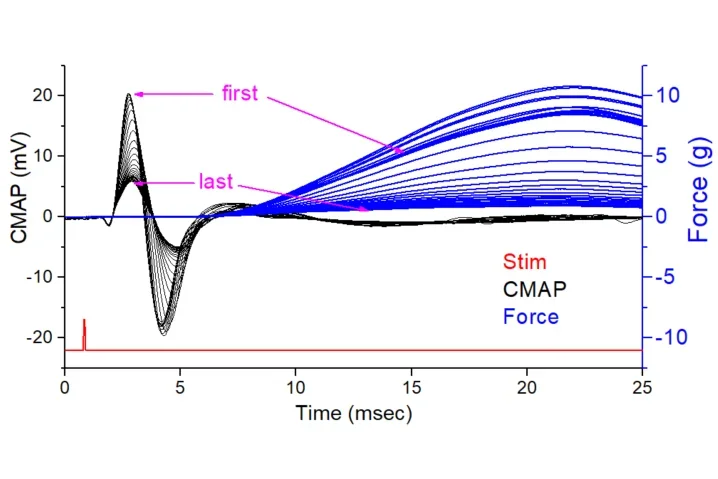
Attack of hypokalemic periodic paralysis, induced by glucose infusion in the CaV1.1-R528H mouse model
Leveraging Disease Mechanism into Development of Therapeutics for Periodic Paralysis
Quantitatively define the efficacy and feasibility of lifestyles changes (exercise, hydration, diet) to minimize the likelihood for an attack of weakness.
Repurposing drugs to stabilize the resting membrane potential of muscle fibers and thereby prevent attacks or enhance the recovery from weakness.
Computational chemistry to indentify novel compounds (small molecules or synthetic peptides) that attenuate the deleterious behavior of mutant channels.
Gene therapy to remove or to correct the missense mutation of ion channel genes causing periodic paralysis.
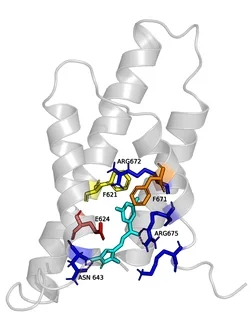
Docking of a novel drug (cyan color) to block the anomalous leak in a mutant NaV1.4 sodium channel causing hypokalemic periodic paralysis